Guide
Static vs dynamic stretching.
Two of the most common ways to stretch, with different jobs. Here is what each one is, when to use it and where assisted stretching fits.
01
Static stretching
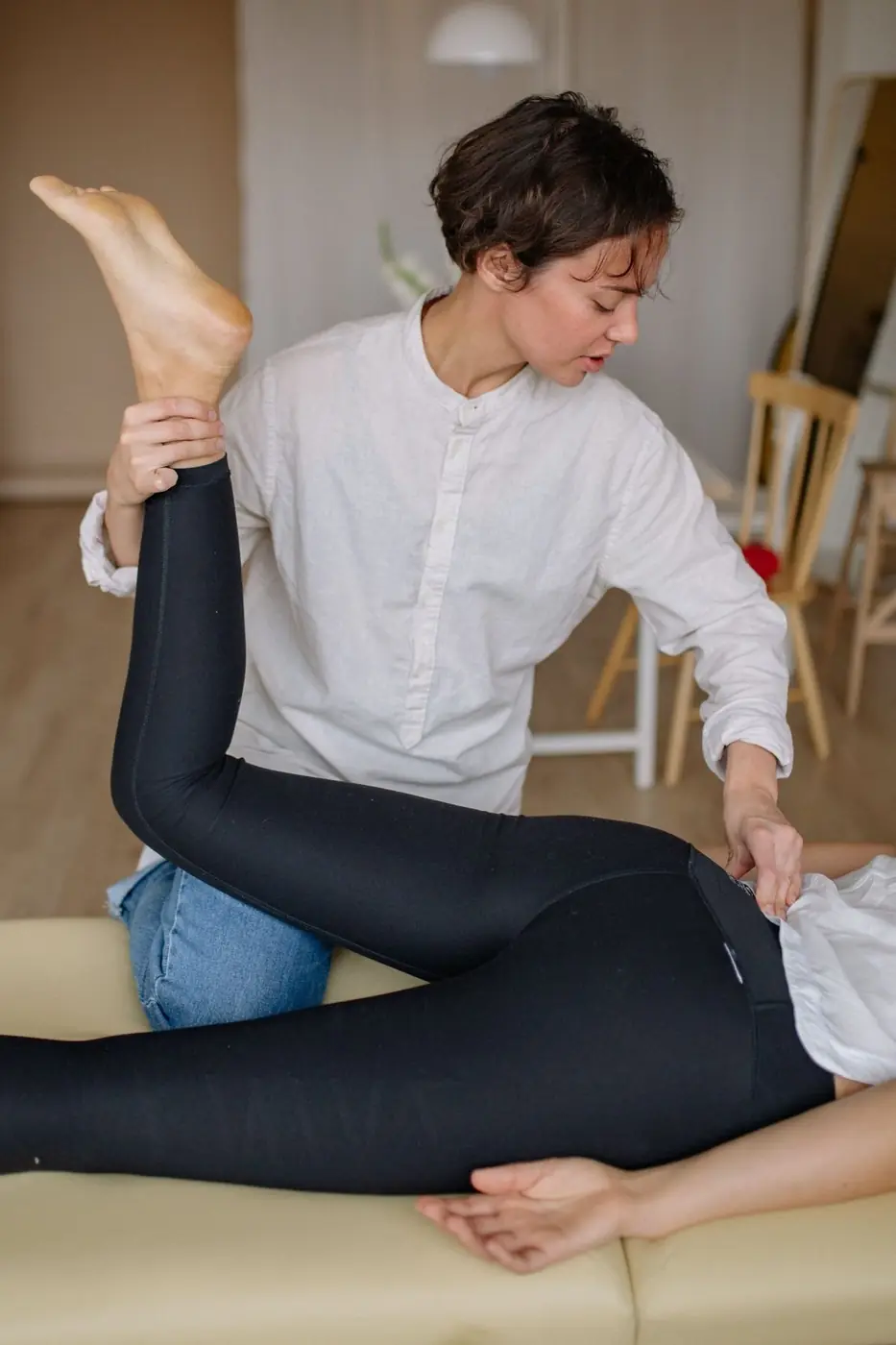
Moving into a stretch and holding it still, usually for 20 to 60 seconds. It is simple, well researched and effective for improving flexibility over time. Most of an assisted stretching session is static or passive: your practitioner holds the position while you relax.
02
Dynamic stretching
Moving a joint repeatedly through its range in a controlled way: leg swings, walking lunges, arm circles. It raises temperature and prepares the body for activity, which is why it is the backbone of a good warm-up.
03
When to use each
Before sport or a hard session, dynamic movement is usually the better choice. Static stretching fits after training, in the evening or as its own session. If you like a few short static holds in your warm-up, the research suggests that is generally fine; very long holds just before explosive efforts are best avoided.
04
What about PNF?
PNF (proprioceptive neuromuscular facilitation) combines a stretch with a gentle contraction of the muscle against resistance, followed by relaxing further into the stretch. Research shows it can improve range of motion. It needs a partner or practitioner to do well, and whether it suits you is a clinical judgement.
05
How we use them
Your assisted session is mainly supported static stretching, chosen and adjusted by an osteopath or physiotherapist. Your home routine might include both: a few static stretches for the areas you are working on, and dynamic moves to use before sport. How often should you stretch?
Key takeaways
- Static stretching means holding a position; dynamic means moving through a range.
- Use dynamic movement to warm up, static stretching after or separately.
- Both can play a part in a balanced routine.
- Assisted sessions are mainly supported static stretching, tailored to you.