Guide
Flexibility vs mobility.
The two words are often used as if they mean the same thing. They do not, and knowing the difference helps you choose what to work on.
01
Flexibility: how far you can go
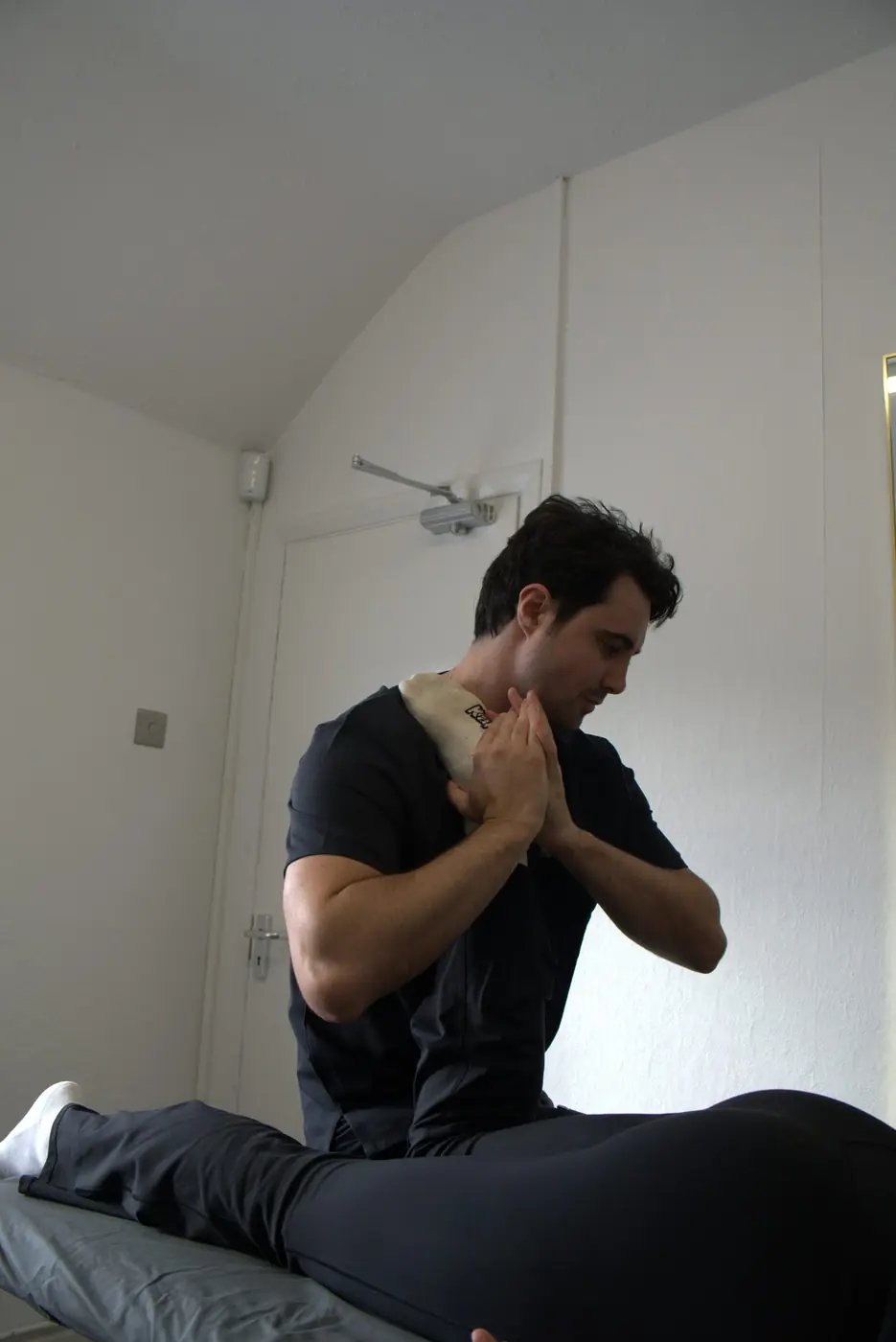
Flexibility describes the range a joint can reach, usually with help: lying on your back while someone lifts your straight leg, for example. It is influenced by your muscles and connective tissue, your joint structure and, importantly, by how comfortable your nervous system is with the stretch sensation.
02
Mobility: what you can do with it
Mobility is your ability to move through a range actively and with control: lifting that same leg yourself, sinking into a deep squat, or reaching overhead while holding a weight. It needs flexibility, but also strength and coordination at the end of the range.
03
Why the difference matters
It is common to have more flexibility than mobility. Plenty of people can be stretched into a deep hip position on a treatment table but cannot reach it on their own in a squat. Others feel tight but have plenty of passive range and mainly need control. A movement screen helps tell these apart, so your time goes on the right thing.
04
How to work on each
Flexibility responds to regular stretching, whether static, assisted or PNF style. Mobility responds to moving actively through your range, and to strength training through a full range of motion, which research shows can also improve flexibility.
Most people benefit from a mix: stretching to open up range, then active work to own it.
05
Where assisted stretching fits
Assisted stretching is mainly a flexibility tool: your practitioner positions and supports you so you can relax into a stretch. We then give you simple active exercises or stretches for home, so what you gain on the table carries into how you move. How it works · Benefits.
Key takeaways
- Flexibility is how far a joint can move; mobility is how well you control that range.
- You can be flexible without being mobile, and it is common.
- Stretching builds flexibility; active and strength work through range builds mobility.
- A movement screen helps you work on the right one.